Last Updated: February 19 2026 | By Farwah Jafri | 7 minutes Read



Subscribe for business tips, tax updates, financial fundamentals and more.
1. Build a Cash Flow Plan That Looks Ahead, Not Just Back
2. Separate Business and Personal Money Completely
3. Plan for Taxes All Year, Not at the Deadline
4. Create a Simple Profit Plan, Not Just a Revenue Goal
5. Review Your Numbers Monthly and Adjust Fast
Why Simple Financial Planning Works Better Than Complex Systems
Strong Financial Planning Builds Confident Business Owners
1. Build a Cash Flow Plan That Looks Ahead, Not Just Back
2. Separate Business and Personal Money Completely
3. Plan for Taxes All Year, Not at the Deadline
4. Create a Simple Profit Plan, Not Just a Revenue Goal
5. Review Your Numbers Monthly and Adjust Fast
Why Simple Financial Planning Works Better Than Complex Systems
Strong Financial Planning Builds Confident Business Owners
Running a small business is not just about sales, marketing, or growth ideas. Behind every successful business is a clear money plan that supports daily decisions and long-term goals. Many business owners work hard but still feel unsure about where their money is going or how prepared they are for the future. That uncertainty usually comes from weak or inconsistent financial planning.
According to U.S. Small Business Administration data, poor cash flow management and lack of planning are among the top reasons small businesses struggle in their early years. This is why financial planning for small business owners is not optional. It is a core business skill. When done right, it helps you stay profitable, reduce stress, and make confident decisions even during slow periods.
In this guide, we break down five simple, but powerful financial planning tips based on real data and proven practices. These are practical steps you can apply without using complex tools or financial jargon.
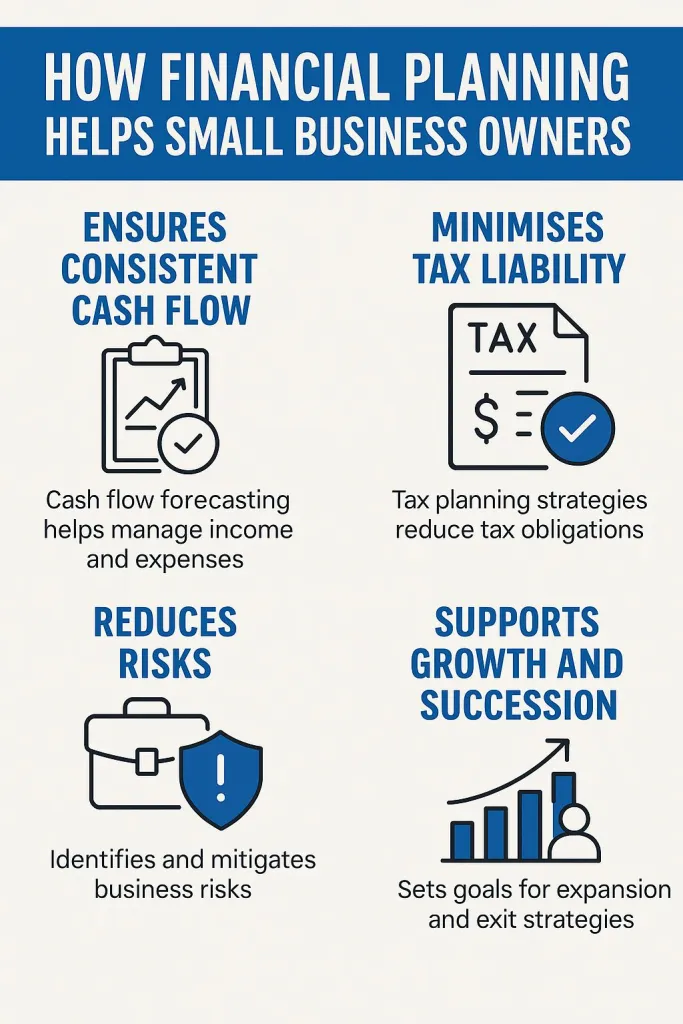
Source: manlyfs.com.au
Cash flow is the lifeline of any small business. Research from JPMorgan Chase shows that nearly two third of small businesses face cash flow issues every year. Many profitable businesses still struggle because cash comes in later than expenses go out.
A solid cash flow plan starts with tracking when money actually moves, not just when invoices are sent or bills are recorded. You should know:
This forward view is a key part of financial planning for small business owners because it helps you avoid surprises. Instead of reacting to shortfalls, you can prepare for them.
Experts recommend a rolling 3 to 6 month cash forecast. Update it monthly using real numbers. This simple habit improves decision making around hiring, inventory, and marketing spend.
Cash flow planning is also a core element of small business financial planning because lenders and investors often look at cash stability before approving funding.

Many small business owners still mix personal and business finances, especially in the early stages. While this may feel convenient, research shows it leads to poor tracking, tax issues, and unclear profitability.
A study by the National Small Business Association found that businesses with separate accounts are far more likely to understand their true financial position. This separation is a basic but critical step in small business owner financial planning.
Here is what separating finances helps you achieve:
Open a dedicated business bank account and credit card. Pay yourself a set amount instead of pulling money randomly. This creates discipline and supports long-term financial planning for business owners who want stability, not guesswork.
Over time, this clarity also helps when you review profits, plan investments, or prepare for growth.
Taxes are one of the biggest financial stress points for business owners. The problem is rarely the tax bill itself. It is the lack of planning.
IRS data shows that many small businesses underpay estimated taxes, leading to penalties and cash strain. Proper financial planning for small business owners includes setting aside money for taxes every month, not just during tax season.
Smart tax planning involves:
This approach turns taxes into a predictable expense instead of an emergency. It also helps you take advantage of deductions legally and avoid last-minute decisions.
Good tax planning is a major part of financial planning for small businesses because it protects cash flow and supports compliance at the same time.
Many business owners focus heavily on revenue. But revenue alone does not pay the bills. Profit does.
Research from SCORE shows that small businesses with clear profit targets are more likely to survive beyond five years. This is why profit planning is essential in financial planning for small business owners.
A profit plan answers three simple questions:
You do not need complex models. Start with your target income, add fixed and variable costs, and work backward to pricing and sales goals. This approach supports small business owner financial planning by linking daily decisions to long-term outcomes. It also makes it easier to spot overspending early.
Having a profit plan is one of the most practical forms of financial advice for business owners because it shifts focus from working harder to working smarter.

One of the most overlooked habits in financial planning for small business owners is regular review. Many owners only look at their numbers when something feels wrong.
Data from QuickBooks surveys shows that businesses that review financial reports monthly are more confident and better prepared for downturns. Monthly reviews help you:
Focus on a few key reports:
You do not need to analyze every detail. Look for changes, patterns, and gaps. This habit strengthens financial planning for business owners because it turns numbers into action.
Consistent reviews also provide reliable financial advice for small business owners in real time, based on your own data instead of assumptions.
Many small businesses avoid planning because they think it requires advanced tools or financial expertise. Research shows the opposite. Simple systems that are used consistently outperform complex systems that are ignored.
Effective financial planning for small business owners is about habits, not spreadsheets. When you understand your cash flow, plan for taxes, protect profit, and review numbers regularly, you build resilience.
This approach also supports long-term financial planning for small businesses because it adapts as your business grows. What matters most is clarity and consistency.
Every small business owner wants stability, growth, and peace of mind. That starts with clear financial habits. The five tips covered here are simple, but they are backed by real data and proven results.
When you focus on cash flow, separate finances, plan for taxes, protect profit, and review numbers regularly, financial planning for small business owners becomes a practical tool, not a stressful task.
These steps also support smarter financial planning for business owners, better decision making, and long-term sustainability. If you apply them consistently, you will gain clarity, control, and confidence in your business finances.
If you want expert support to put these strategies into action, we recommend working with Monily. We help small business owners build clear, reliable financial systems so they can focus on growth instead of stress.
Book a consultation with us to get started with smarter planning today.

Subscribe for business tips, tax updates, financial fundamentals and more.
MORE BLOGS

Starting a business is an exciting journey, but let’s be real—understanding the legal stuff can feel like trying to read an ancient scroll written in a […]
Learn More →
So, you’ve been running your business as a sole proprietor, and now you’re thinking about leveling up by switching to an LLC? Smart move! An LLC […]
Learn More →
NetSuite, a robust cloud-based Enterprise Resource Planning (ERP) solution, has gained widespread recognition across businesses of all scales. Its tools and capabilities empower organizations to streamline […]
Learn More →